
Introduction
When choosing LED headlights, there is an important factor that directly affects driving visibility and user experience: color temperature.
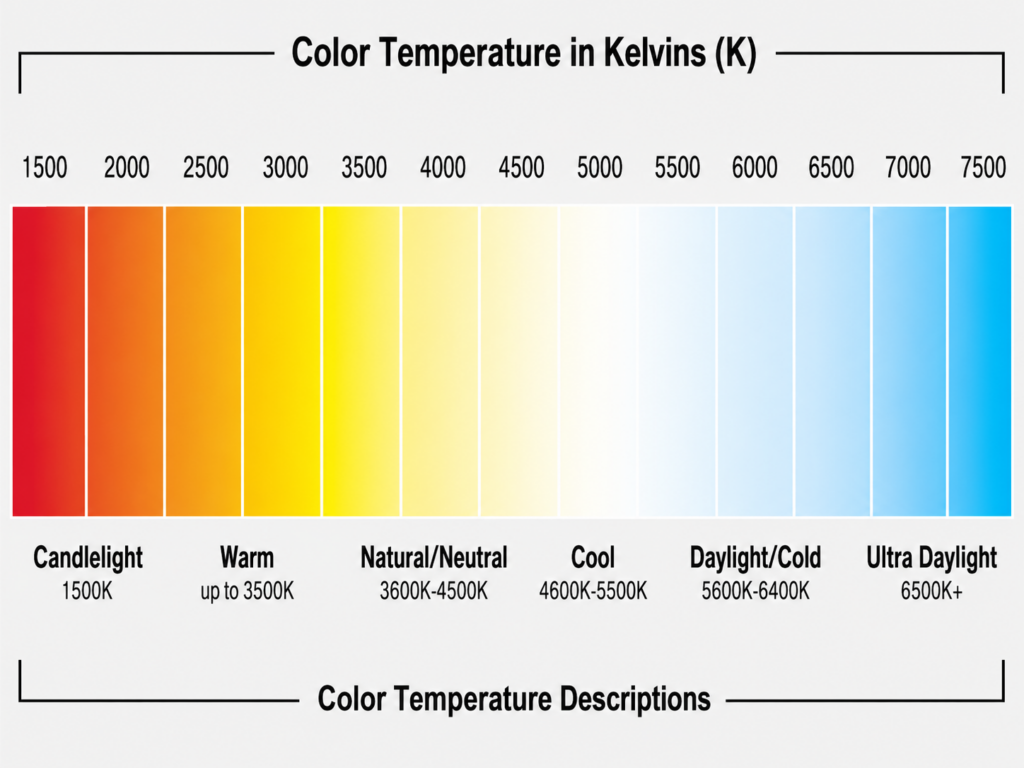
Color temperature is usually measured in Kelvin, or K. It describes the visual color of the light. A lower Kelvin value looks warmer and more yellow, while a higher Kelvin value looks cooler and more bluish.
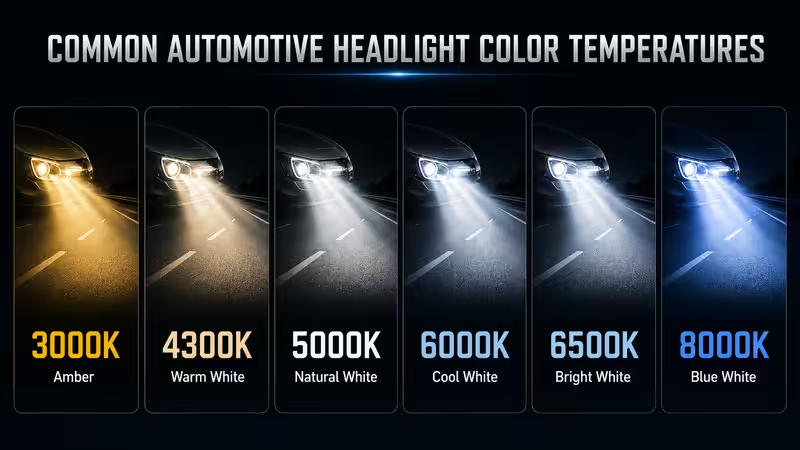
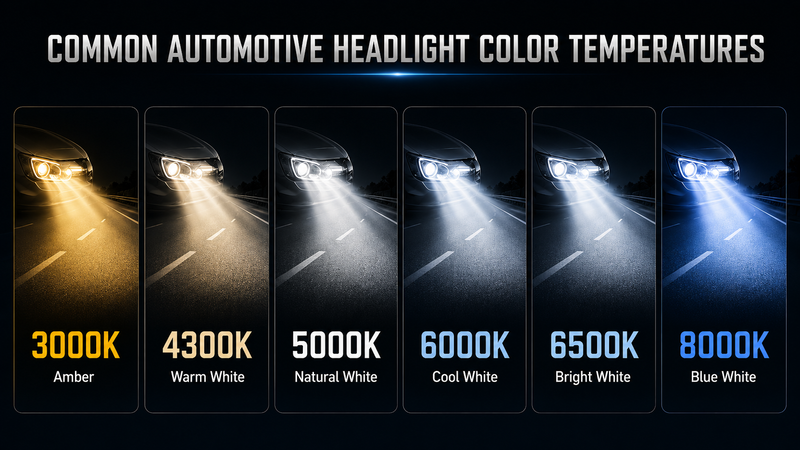
For automotive lighting, common color temperatures include 3000K, 4300K, 5000K, 6000K, 6500K, and 8000K. Each one creates a different visual effect and performs differently in real driving conditions.
So, which color temperature is better for headlights? The answer depends on the vehicle type, road environment, weather conditions, local regulations, and customer preference in the target market.
What Is Color Temperature?
Color temperature does not mean the actual heat of the bulb. It refers to the color appearance of the light.
A simple way to understand it:
| Color Temperature | Light Color | Common Feeling |
|---|---|---|
| 3000K | Yellow / Amber | Warm, fog friendly |
| 4300K | Warm white | Close to OEM HID |
| 5000K | Natural white | Balanced and comfortable |
| 6000K | Cool white | Modern LED look |
| 6500K | Bright cool white | Popular aftermarket style |
| 8000K+ | Blue white | Stylish, but less practical |
In the automotive aftermarket, 6000K and 6500K are very popular because they give a clean, bright, modern LED appearance. However, for actual road visibility, higher color temperature is not always better.
3000K: Yellow Light for Fog, Rain, and Poor Weather
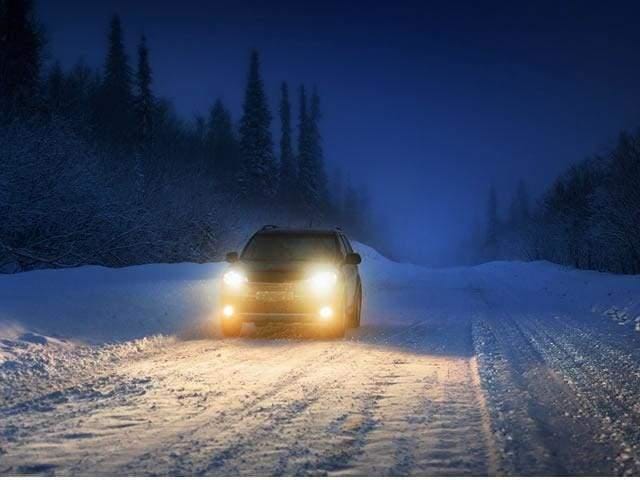
3000K light appears yellow or amber. It is commonly used for fog lights, auxiliary lights, and off road lights.
The biggest advantage of 3000K is that it performs better in foggy, rainy, snowy, or dusty environments. Yellow light usually creates less visual reflection and glare in bad weather, making it easier for drivers to see the road surface and road edges.
Best applications:
3000K is suitable for fog lights, off road lighting, trucks, SUVs, and vehicles used in rainy, foggy, or dusty areas.
However, 3000K may not look as bright or modern as white LED headlights. For main headlights, some customers may feel the color is too yellow.
4300K: OEM Style Warm White

4300K is close to the color temperature used in many original HID headlight systems. It looks warm white, not too yellow and not too blue.
This color temperature is comfortable for night driving and usually has good visibility on wet roads. It also looks more natural than very cool white light.
Best applications:
4300K is suitable for customers who prefer an OEM style, comfortable night driving, or a more practical lighting solution.
For markets where customers care more about safe visibility than a strong aftermarket look, 4300K can be a good choice.
5000K: Natural White and Balanced Performance
5000K is often considered a balanced color temperature. It looks close to natural daylight and provides a clean white beam without too much blue tone.
Compared with 6000K or 6500K, 5000K can feel softer and more comfortable to the eyes. Compared with 3000K or 4300K, it looks cleaner and more modern.
Best applications:
5000K is suitable for daily driving, city roads, highway use, and customers who want a balance between visibility and appearance.
For professional distributors, 5000K can be a good option when targeting buyers who care about both performance and comfort.
6000K: The Most Popular Cool White LED Color
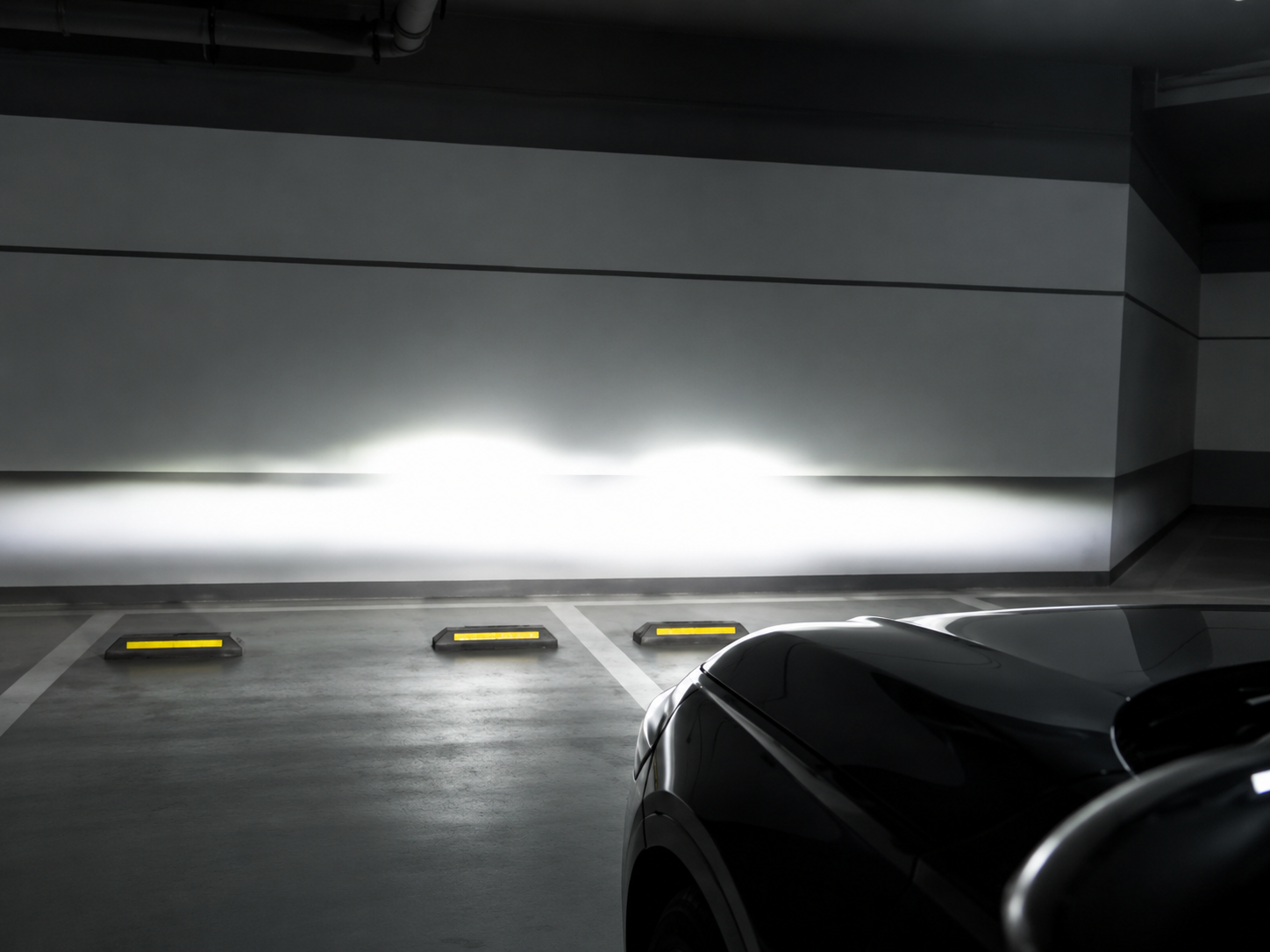
6000K is one of the most popular color temperatures in the LED headlight market. It gives a bright white light with a slightly cool tone.
Many customers like 6000K because it creates a clean and modern LED look. It also matches the visual style of many new vehicles.
Best applications:
6000K is suitable for LED headlights, projector headlights, plug and play LED bulbs, and general aftermarket upgrades.
For many markets, 6000K is the safest commercial choice because it balances appearance, brightness perception, and customer acceptance.
6500K: Bright Cool White for Strong Visual Impact
6500K looks cooler and whiter than 6000K. It often gives customers the feeling of stronger brightness, even when the actual lumen output may be similar.
This color temperature is popular in the aftermarket because it looks sharp and eye catching. Many LED headlight products are marketed around 6500K.
Best applications:
6500K is suitable for markets where customers prefer a strong LED upgrade look, especially for retail shelves, e commerce listings, and visual product demonstrations.
However, 6500K may create more glare perception than lower color temperatures, especially if the beam pattern is not well controlled.
8000K and Above: Blue White, Stylish but Less Practical
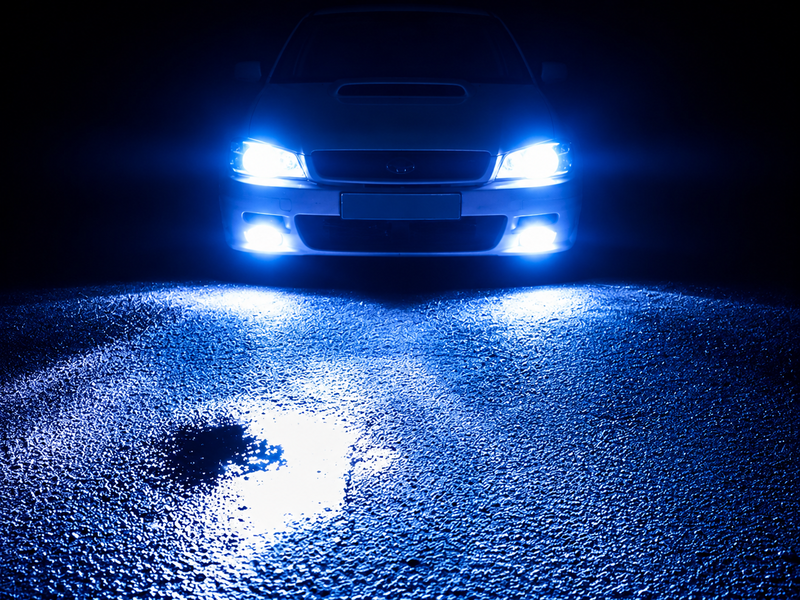
8000K and higher color temperatures usually look blue white or even blue. Some customers may like this style because it looks special and customized.
However, from a practical driving perspective, 8000K is usually not the best choice. The beam may look less natural, and visibility in rain, fog, or wet road conditions may become worse. In some markets, blue tinted headlights may also create compliance concerns.
Best applications:
8000K is mainly used for styling purposes, show cars, or non standard custom lighting. It is not recommended as the main choice for daily driving headlights.
Is Higher Color Temperature Brighter?
Not always.
This is a common misunderstanding in the LED headlight market. Many customers think 6500K or 8000K must be brighter than 4300K or 5000K. In reality, color temperature only describes the color of the light, not the actual brightness.
Real brightness depends on many factors, including:
- LED chip quality
- Optical design
- Stable power
- Thermal management
- Driver solution
- Beam pattern
- Lumen maintenance after heat aging
A poor quality 6500K bulb may look white but still have weak road performance. A well designed 5000K or 6000K bulb can provide better usable visibility because the beam is more focused and stable.
For automotive lighting, usable light on the road is more important than just a white appearance.
Pulsys Field Experience: Very White Light Does Not Always Mean Better Road Visibility
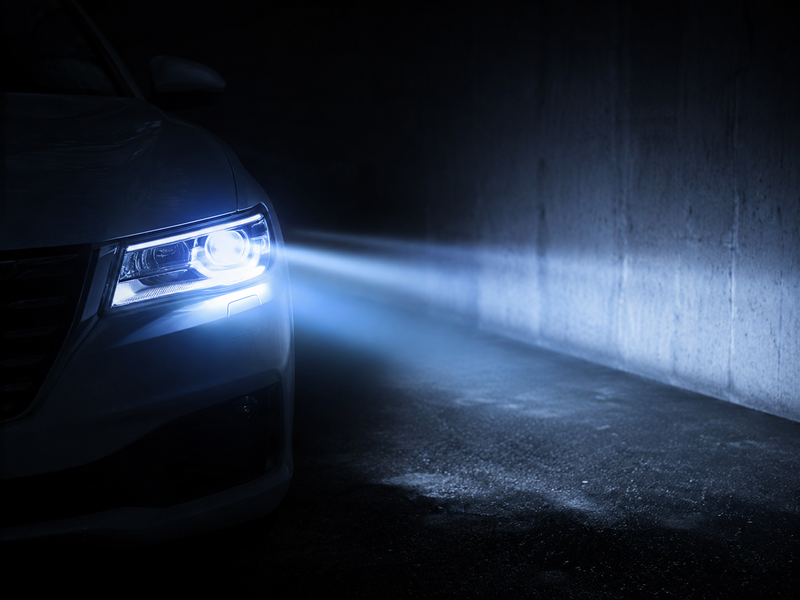
Based on our experience working with distributors, wholesalers, and aftermarket buyers, many customers initially ask for a very white or slightly blue white beam because it looks brighter in product photos or showroom demonstrations.
However, during real vehicle testing, we often remind buyers to check not only the color of the light, but also the beam focus, road coverage, cutoff control, and brightness stability after the lamp has been running for a period of time.
For example, a 6500K or 8000K headlight may look very bright when viewed directly, but if the optical focus is poor, the light may scatter instead of forming an effective beam on the road. In rainy or foggy weather, too much cool white or blue tone can also increase visual reflection and reduce driving comfort.
That is why, for practical headlight projects, we usually recommend 5000K to 6000K as a more balanced range. For customers who want a stronger aftermarket LED appearance, 6500K can be considered, but it should always be matched with proper optical design and heat control.
How to Choose the Right Color Temperature
For daily driving:
Choose 5000K to 6000K. These color temperatures provide a clean white beam and are suitable for most customers.
For aftermarket retail sales:
Choose 6000K or 6500K. These are popular because they look bright, modern, and easy to promote.
For fog lights:
Choose 3000K. Yellow light is more suitable for fog, rain, snow, and dusty road conditions.
For OEM style replacement:
Choose 4300K to 5000K. These colors look more natural and comfortable for long time driving.
For off road and outdoor use:
Choose according to the environment. 3000K is better for dust and fog, while 6000K provides a cleaner white beam for open road and general use.
For styling:
8000K or higher can be used for special visual effects, but it is not recommended for practical daily headlights.
Pulsys Selection Experience: Match Color Temperature to the Market, Not Just the Product
In actual sourcing and product development projects, we usually do not recommend one fixed color temperature for every market. The right choice depends on the local driving environment, customer preference, product channel, and vehicle type.
For mainstream aftermarket LED headlight products, 6000K is usually a safe and widely accepted choice because it gives a clean modern white appearance without looking too blue.
For retail or e commerce markets where visual impact is important, some buyers prefer 6500K because it looks brighter in photos, videos, and packaging displays. But we usually suggest controlling the beam pattern carefully to avoid glare complaints.
For fog lights, off road lights, or markets with more rain, dust, fog, or poor road conditions, 3000K can be a more practical option. It may not look as “cool” as white light, but it can provide better visual comfort in difficult weather.
For OEM style replacement or markets where buyers prefer a more natural and comfortable beam, 4300K to 5000K is often a better choice.
Our recommendation process usually starts with a few practical questions:
- Where will the product mainly be sold?
- Is the product for headlight, fog light, work light, or off road use?
- Do customers care more about visual upgrade or real road visibility?
- Will the product be used in rainy, foggy, dusty, or high temperature areas?
- Does the local market have strict requirements for headlamp color?
This is why professional color temperature selection should not be separated from product positioning. The same LED headlight model may need different color temperature options for different markets.
Recommended Color Temperature by Product Type
| Product Type | Recommended Color Temperature |
|---|---|
| LED Headlight Bulbs | 5000K, 6000K, 6500K |
| HID Replacement LED Bulbs | 4300K, 5000K, 6000K |
| Fog Lights | 3000K |
| Off Road Lights | 3000K, 5000K, 6000K |
| Work Lights | 5000K, 6000K |
| Projector LED Headlights | 5000K, 6000K |
| Styling Lights | 6500K, 8000K+ |
Color Temperature and Legal Compliance

For headlight products, color temperature should not be selected only based on appearance. Different markets may have different regulations regarding headlamp color.
In many markets, headlamps are required to emit white light. Very blue, purple, or colored headlights may not be road legal. For distributors and brand owners, it is important to check local requirements before selecting or promoting high color temperature products.
This is especially important for export, wholesale, and private label projects.
Conclusion
Color temperature plays an important role in automotive lighting. It affects not only how the light looks, but also how comfortable and practical the beam feels in real driving conditions.
- 3000K is better for fog and bad weather.
- 4300K gives an OEM style warm white beam.
- 5000K offers natural and balanced visibility.
- 6000K is the most popular cool white LED choice.
- 6500K creates a stronger modern LED appearance.
- 8000K and above are mainly for styling, not daily driving.
When choosing LED headlights, buyers should look beyond color temperature. A high quality lighting product needs the right balance of color, brightness, beam pattern, thermal control, and long term stability.
Pulsys provides automotive LED lighting solutions for distributors, wholesalers, and brand owners, helping customers select the right color temperature and lighting design for different markets and applications. Feel free to contact us anytime, we will based on your market to give you professional advice.