
What Are Daytime Running Lights?
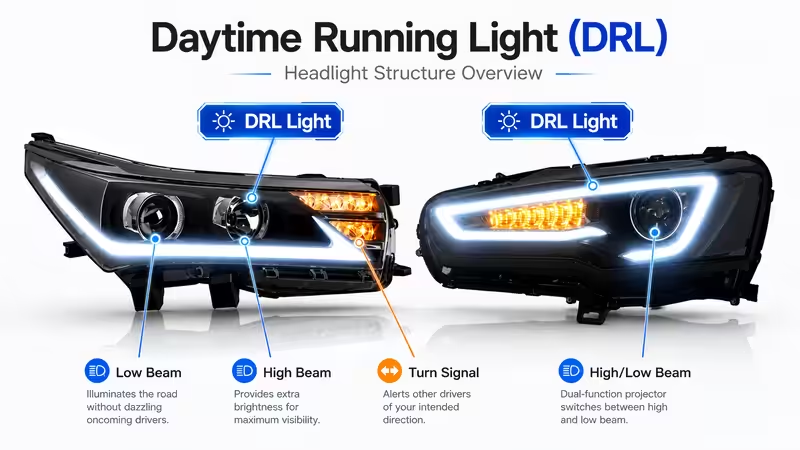
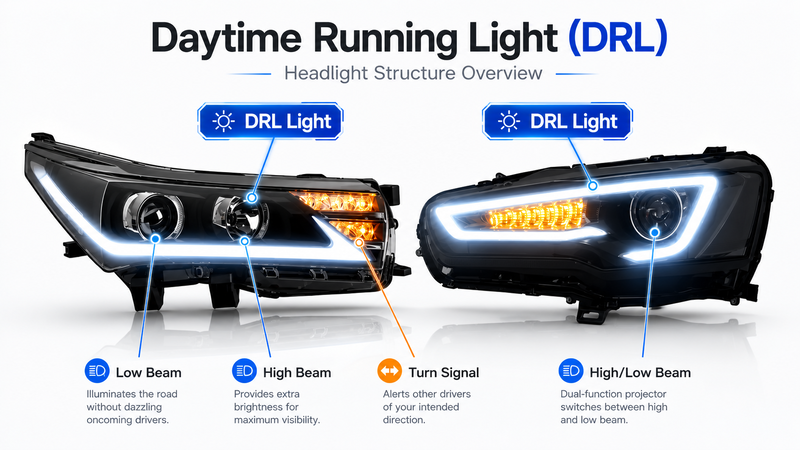
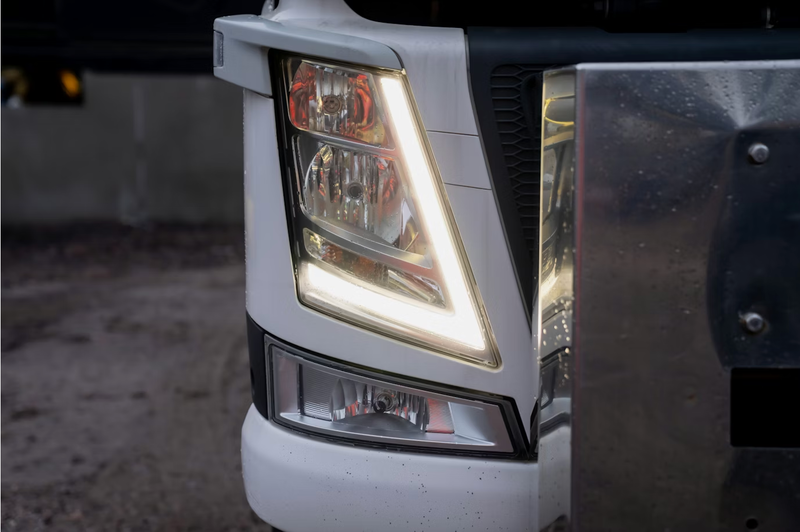
Daytime running lights, also called DRL lights or running lights, are front-facing lights used during daytime running. Their main function is to improve vehicle visibility, so other drivers, pedestrians, cyclists, and other road users can notice the vehicle from a longer distance.
DRLs are not intended to light up the road at night. They are different from headlights, low beam headlights, and fog lamps. Their job is to make the car easier to see in daytime, not to help drivers see the road in the dark.
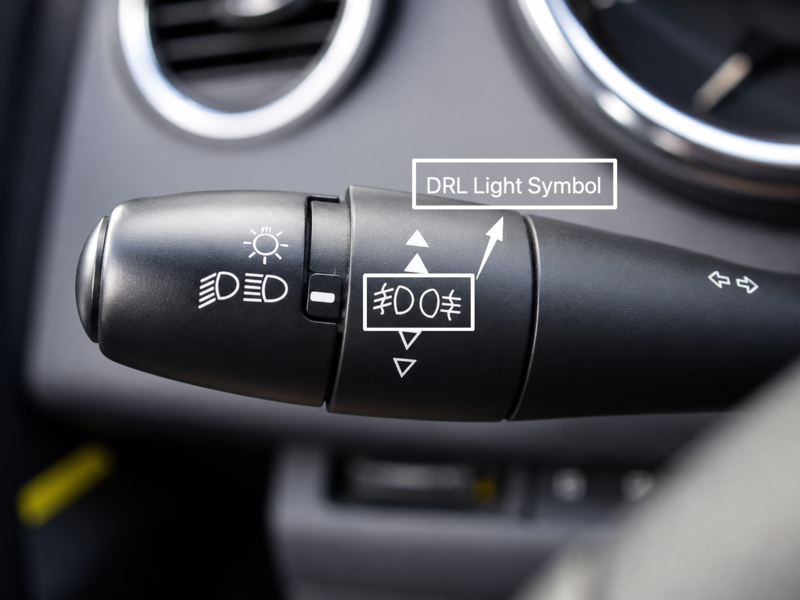
Most DRLs turn on through an automatic function when the ignition starts or when the vehicle is in drive. Drivers usually do not need to switch them on manually.
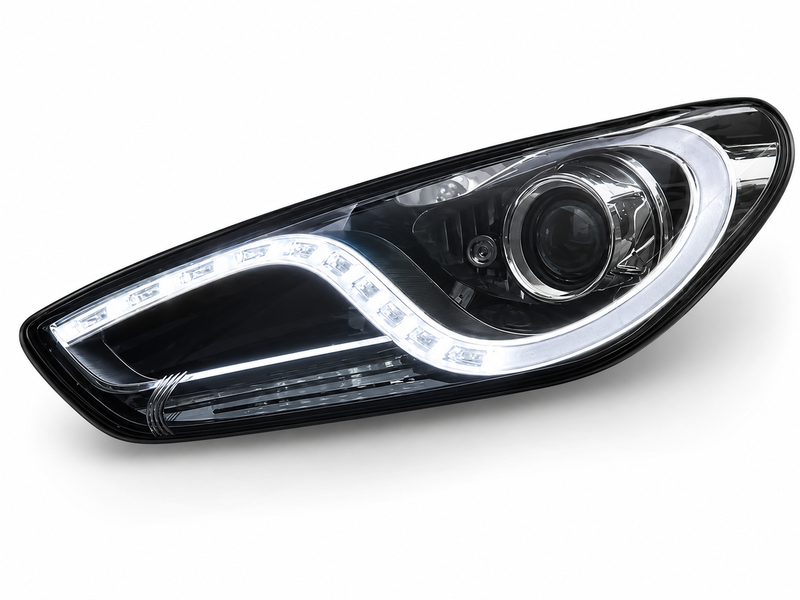
DRLs are usually mounted at the front of the vehicle, around the headlight area, bumper, grille, or front fascia. On many new cars and new vehicles, DRLs are also used as part of the vehicle’s front brand design.
How Daytime Running Light Systems Work
A DRL system normally uses the vehicle’s battery and electrical power. The control system switches the DRLs on when the ignition is active. Some systems also manage dimming, turn signal priority, and headlight interaction.
Modern DRLs usually use LEDs or high intensity leds. Compared with traditional bulbs, LEDs use less power, create less heat, and last longer. Some older systems use reduced-output low beam headlights as DRLs, but LED systems are now more common.
DRLs emit forward light to improve visibility. They are brighter than parking lights, but weaker than headlights. This helps drivers notice the vehicle without creating too much glare.
| DRL Type | Main Feature | Best For | Key Concern |
|---|---|---|---|
| LED DRLs | Low power, long life, strong visibility | New cars, retrofit kits, trucks, SUVs | Need good heat control |
| Halogen DRLs | Uses traditional bulbs | Older models | Higher power use |
| Low beam headlight DRLs | Uses reduced-output headlights | Some OEM systems | More power consumption |
| OEM-style DRLs | Integrated into front design | Passenger cars, new vehicles | Model-specific fitment |
DRL Lights vs Headlights and Fog Lamps
DRLs, headlights, and fog lamps should not be used for the same purpose.
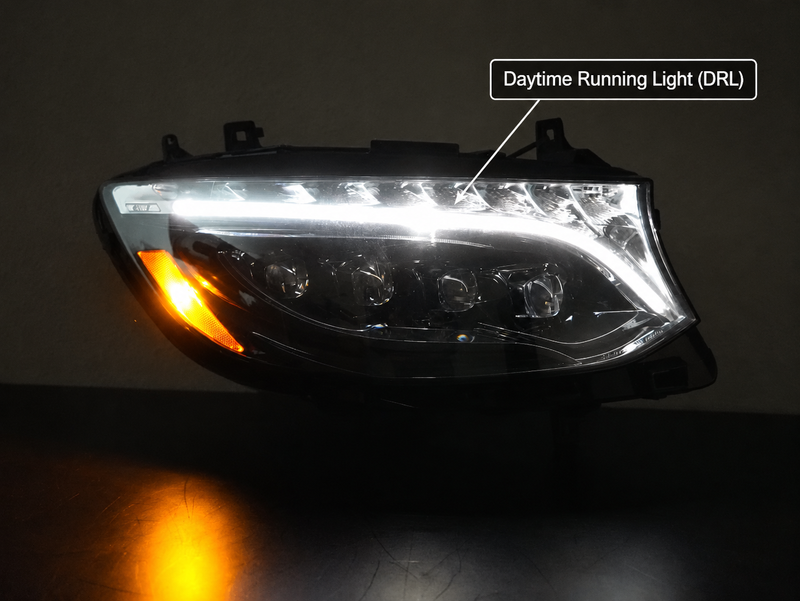
DRL lights are for daytime visibility. They help other drivers notice your vehicle, especially in traffic, open roads, shaded areas, or changing light.
Headlights are for night, dusk, dawn, tunnels, and poor weather conditions. In rain, snow, or when visibility is low, DRLs alone are not enough.
Fog lamps are used specifically in fog or similar low-visibility weather. They are mounted low and designed to reduce reflected light. They should not replace headlights or DRLs.
| Light Type | Main Function | Use When |
|---|---|---|
| DRL lights | Increase daytime vehicle visibility | Daytime driving |
| Headlights | Help drivers see and be seen | Night, dusk, dawn, rain, snow |
| Fog lamps | Improve low-level visibility | Fog or poor weather conditions |
| Taillights | Improve rear visibility | Dark conditions or automatic lighting systems |
Benefits of Running Lights
The main benefits of DRLs are increased visibility and better road safety. When a vehicle is easier to see, other drivers have more time to react. This can help reduce daytime accidents, especially when people driving are distracted or when the surroundings make a vehicle harder to notice.
DRLs are useful for passenger cars, trucks, buses, vans, and commercial vehicles. For fleets, better visibility can help manage safety risk and reduce repair cost, downtime, and lost money from accidents.
For B2B buyers, DRLs are not just a style upgrade. They can create real value for distributors, retrofit shops, and fleet customers who are concerned about safety, visibility, and reliable daily usage.
Motorcycle Visibility and Safety Concerns
DRLs can improve vehicle visibility, but they also create some concerns for motorcycle riders. If a large car, truck, or bus uses very bright DRLs, motorcycles may become less noticeable in traffic.
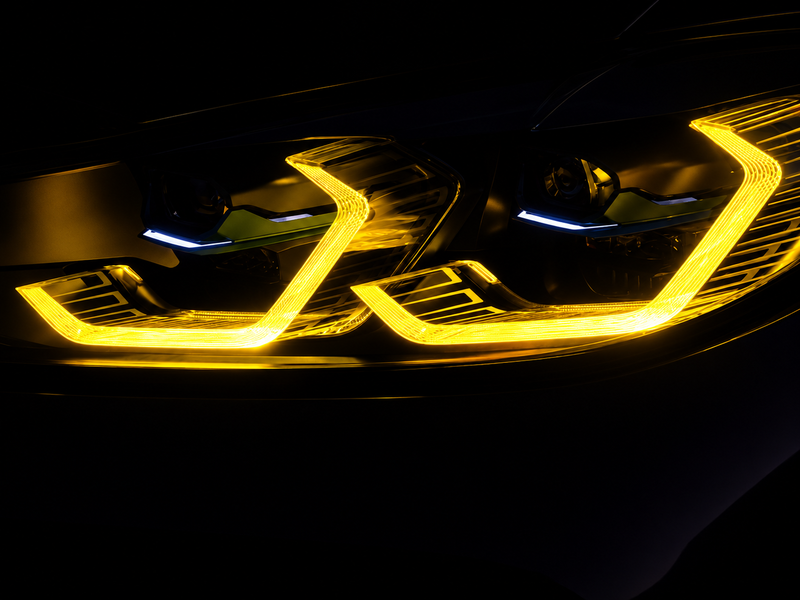
For motorcycle use, amber DRLs can help create stronger contrast from white vehicle lights, if local rules allow it. This can help other drivers notice motorcycles more easily.
Another issue is flashing, glare, or turn-signal masking. If the DRL is too bright or mounted too close to the turn signal, drivers may not notice the signal clearly. A good DRL should improve visibility without blocking the function of other lights.
Regulations and Compliance
DRL regulations are different in each market. Some countries require DRLs, some only permit them, and some control their color, brightness, mounting position, and automatic function.
Scandinavian countries were early adopters of DRLs because of long periods of low daylight. Canada has required DRLs on new vehicles since 1990. In the United States, DRLs are permitted, but not federally required. Some states require headlights when windshield wipers are used, which matters in rain and poor visibility.
In the European Union, DRLs are required on new cars, but dedicated DRL lamps are expected. Headlights and fog lamps cannot simply be treated as DRLs.
Before buying, modifying, or shipping DRL products, always check the local vehicle code, transport department, or regulator. A product that is legal in one country may be illegal in another.
| Market | DRL Rule | What Buyers Should Check |
|---|---|---|
| Canada | Required since 1990 | Automatic function, headlights, taillights |
| United States | Permitted, not federally required | State rules, wipers and headlights |
| European Union | Required on new cars | Dedicated DRL compliance |
| Australia | Permitted, not required nationwide | Local usage rules |
| Scandinavian countries | Early DRL adoption | Daytime visibility standards |
Environmental Impact and Power Consumption
DRLs use vehicle power. High-power DRLs or headlight-based systems can increase electrical load and fuel use, especially across large fleets.
Low-power LED DRLs are better for most vehicles. They reduce power consumption, generate less heat, and help manage long-term operating cost. For distributors and fleet buyers, LED DRLs usually offer a better balance of visibility, durability, and cost.
Off Road and Auxiliary Uses
For off road driving, lighting needs are different. Drivers may need wider or longer light output for trails, campsites, recovery work, or remote roads.
However, many off-road lights are too bright for public roads. Using them in traffic may create glare and can be illegal. Off-road auxiliary lights should have a clear switch, proper wiring, and correct usage instructions.
Common mounting positions include bumpers, grille areas, roof racks, ditch-light brackets, and rear work-light positions. The best choice depends on the vehicle model, road condition, and intended usage.
Choosing DRL Lights and Aftermarket Kits
When choosing DRL lights, do not only look at brightness or appearance. For B2B buyers, the real quality comes from fitment, waterproof rating, heat control, wiring stability, beam pattern, and compliance.
Many customers ask for the brightest product first. But in real use, higher power is not always better. Too much power may create heat, glare, wiring load, and after-sales problems.
Use this checklist before ordering:
| Buying Point | Why It Matters |
|---|---|
| Vehicle models | Confirms whether the kit can fit the car, truck, or SUV |
| Voltage and power | Helps avoid flickering or unstable startup |
| Waterproof design | Important for rain, snow, washing, and off-road use |
| Heat dissipation | Reduces brightness drop and failure risk |
| Beam control | Improves visibility without glare |
| Installation method | Affects labor time and after-sales cost |
| Compliance | Reduces legal and shipping risk |
Supplier Experience: What B2B Buyers Often Miss
From our experience, many buyers focus too much on wattage, brightness, and appearance. These points are easy to compare, but they do not decide whether the product sells well long term.
For wholesalers, retrofit shops, and distributors, stability, waterproof performance, heat dissipation, installation compatibility, and beam control are more important. A DRL that looks bright in a short test may still cause complaints after rain, long usage, or poor wiring.
Before bulk orders, we usually recommend checking the target vehicle models, local regulations, installation space, voltage system, and expected usage. This helps buyers choose products that are easier to install, easier to sell, and easier to support after delivery.
Compatible Makes and Models
Universal DRL kits can fit many models, including passenger cars, SUVs, trucks, and vans. But “universal” does not mean no testing is needed.
Before installation, do a bench test and then a vehicle test. Check the mounting space, wiring path, ACC connection, headlight interaction, and turn signal behavior.
For B2B buyers, it is better to test samples on common local vehicles before bulk purchase. This reduces returns and helps sales teams recommend the right kit to customers.
Installation, Maintenance, and Troubleshooting
A basic DRL installation usually includes mounting the lamps, connecting the wiring harness, adding fuse protection, connecting ACC power, grounding the system, and testing the automatic function.
Common failure symptoms include flickering, one side not working, warning errors, unstable startup, water ingress, and DRL or turn-signal conflict.
| Problem | Likely Cause | Quick Check |
|---|---|---|
| DRL not working | Wrong wiring, blown fuse, poor ground | Check ACC power, fuse, ground |
| Flickering | Unstable voltage or loose connector | Check connector and battery voltage |
| One side off | Wiring issue or lamp failure | Swap left and right lamps to test |
| Warning error | Vehicle compatibility issue | Check decoder or control module |
| Water ingress | Poor sealing | Check lens, housing, cable entry |
| Turn signal conflict | Wrong control wiring | Check dimming and signal wire |
Supplier Experience: Common After-sales Problems
Many DRL failures are not caused by the lamp itself. They are caused by incorrect wiring, unstable power supply, poor grounding, or low-quality connectors.
Before final installation, test the DRL kit first. Confirm ACC power, fuse, relay, connector quality, and ground point. For DRL and turn signal combined products, also check whether the DRL dims or turns off correctly when the turn signal works.
Clear wiring instructions and pre-installation testing can reduce installation mistakes and after-sales complaints.
Looking for DRL Lights or Retrofit Kits?
If you are interested in DRL lights, daytime running lights, or custom automotive lighting kits, we can help you choose the right products for your market.
We support wholesalers, distributors, retrofit shops, and commercial vehicle suppliers with product selection, sample testing, custom development, and bulk supply.
Contact us to discuss your target vehicle models, price range, installation needs, and shipping requirements.