
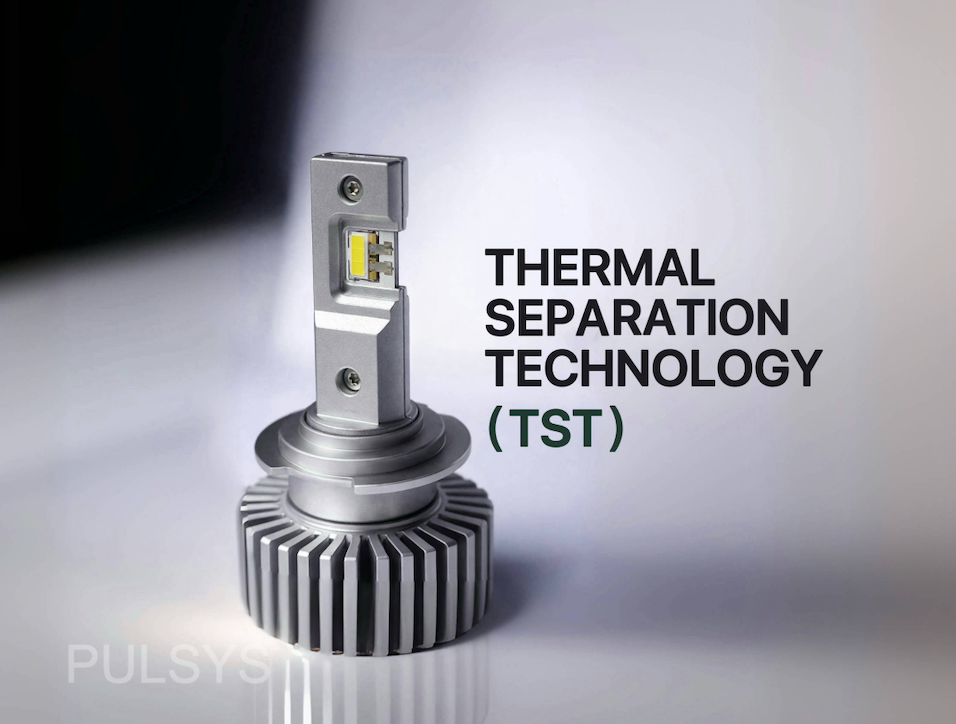
In high-power LED headlight bulbs, the real challenge is usually not how bright a bulb can be for a few seconds. The real challenge is how much useful output it can maintain after it heats up, whether the beam pattern stays properly focused, and whether the bulb can remain reliable over time. That is why many LED bulbs may look impressive on paper but still fall short in real use. Some lose brightness as heat builds up. Some create glare because the light source is not properly focused. Some simply do not hold up well under long-term thermal stress.
At the center of this problem is a fundamental engineering tradeoff: the light-emitting area needs to stay compact to support correct optical focus, but the smaller that structure becomes, the harder it is to remove heat efficiently at high power. TST, or Thermal Separation Technology, as a solution to that tradeoff. In its description, the electrical connections are moved to the top of the LED, allowing the bottom surface to be used more fully for thermal transfer. The stated result is lower thermal resistance, higher usable power, and a compact structure that still supports beam focus.
For B2B buyers, this matters because TST is not just another marketing term. It points to a real question that affects product selection, warranty risk, project fit, and customer satisfaction: has the bulb been engineered to balance power, heat, focus, and reliability, or is it simply chasing output numbers?
Why Heat Management Sets the Limit for High-Power LED Bulbs
As LED headlight bulbs move toward higher power density, heat becomes one of the main limiting factors. Lumileds’ thermal resistance white paper explains that junction temperature and thermal resistance are central to LED design validation and long-term performance. ams OSRAM likewise notes that proper thermal management is essential for reliability, lifetime, and optimal performance, especially in high-power LEDs.
In simple terms, heat must travel through a chain:
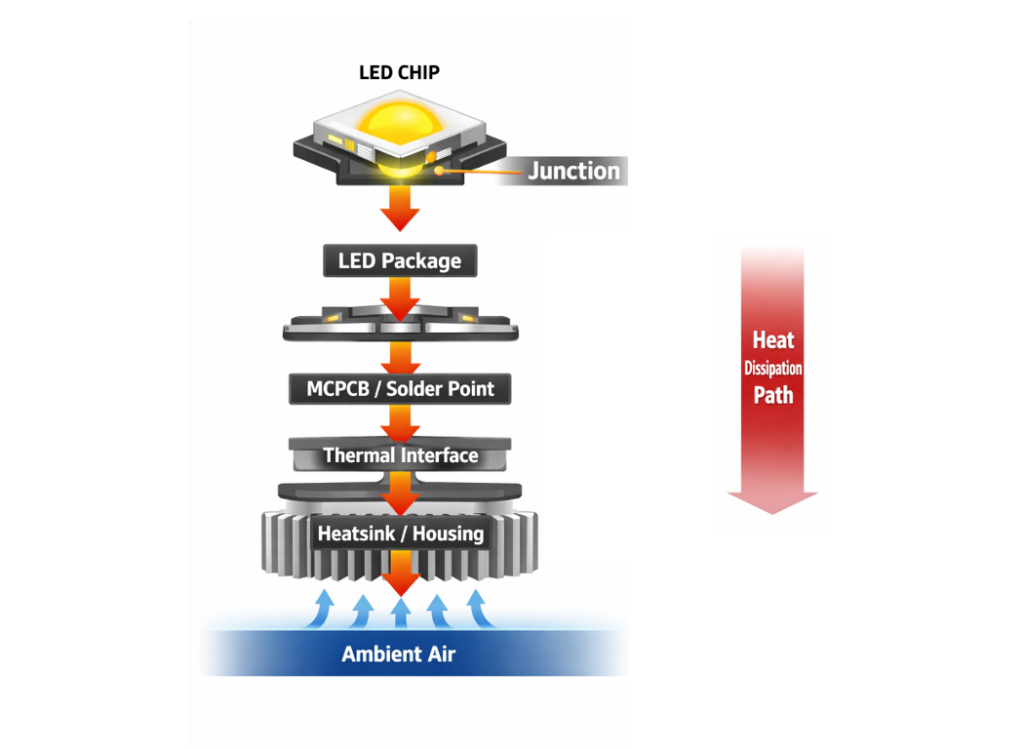
Every stage adds resistance to heat flow. If too much thermal resistance builds up anywhere along that path, heat stays trapped near the LED chip, driving up junction temperature and reducing the bulb’s effective power window.
That is why a high lumen number alone does not tell the full story. What matters more is whether the bulb can maintain stable performance under steady-state conditions, not just during initial startup. In addition, higher junction temperatures accelerate failure behavior, reinforcing the fact that thermal design is closely tied to reliability and service life.
What Is TST Technology?
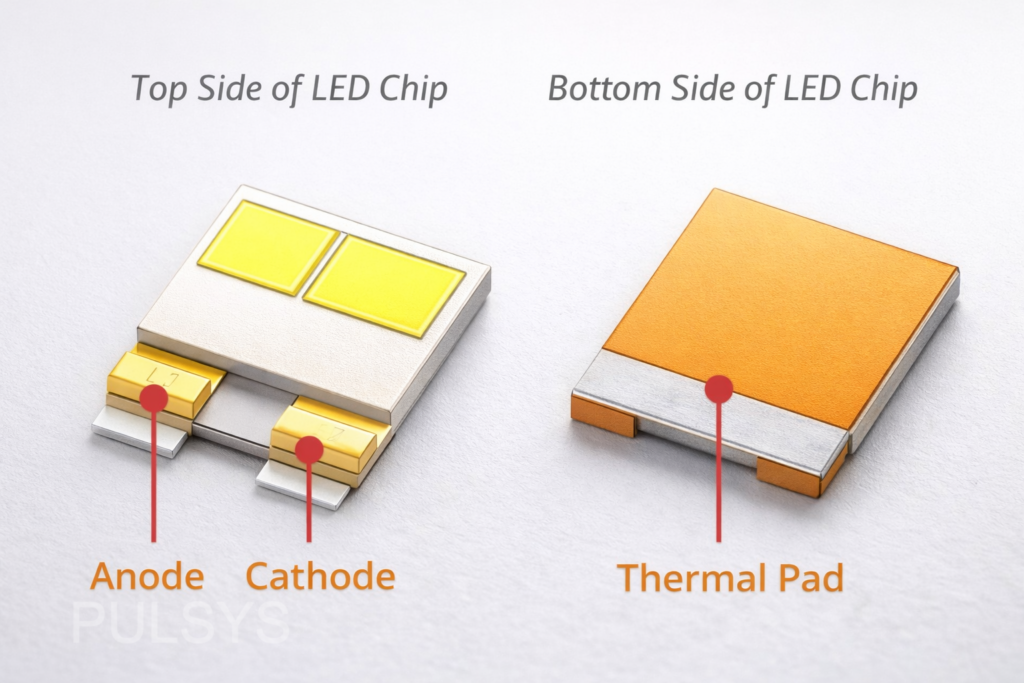
TST stands for Thermal Separation Technology. The core idea is straightforward: instead of forcing the bottom side of the LED to handle both electrical connection and thermal transfer, TST places the electrical connections on the top side of the LED. That leaves more of the bottom surface available as a dedicated thermal path. This lowers thermal resistance and allows the bulb to operate at higher power while maintaining focus.
As shown in the figure, the top side of the LED chip contains the anode and cathode, which are the electrical connection points needed to power the LED. The bottom side of the chip is mainly used as the thermal pad, which helps move heat away from the LED and into the board. This layout is important because it separates the electrical path from the heat-transfer path, allowing the package to use the bottom surface more efficiently for cooling.
This matters because traditional high-power LED structures often have to share limited bottom-side area between the anode, cathode, and thermal pad. In small LED packages, that creates a real packaging constraint: the same limited space must support both current flow and heat flow. TST changes that geometry by separating the electrical path from the thermal path. In practical terms, it gives heat a more continuous route out of the chip and into the board.
So TST is best understood not as a magic buzzword, but as a package-level heat path optimization approach. Its purpose is not simply to make a bulb “cooler.” Its purpose is to help a compact, high-power LED structure run more efficiently by reducing one of the most common bottlenecks in small emitter designs: limited thermal transfer area.
Why TST Has an Advantage Over Conventional Structures
In many conventional LED designs, the bottom side must do too many jobs at once. It may need to support electrical contacts, routing constraints, and heat transfer all within a very limited footprint. That can break up the continuous thermal interface and reduce the effective area available for moving heat away from the chip. As power rises, this kind of layout becomes harder to manage.
TST aims to relieve that pressure at the package level. By moving electrical connections to the top, the bottom side can act more fully as a thermal interface. That creates three practical advantages.
- Reduce thermal resistance: The full bottom thermal surface to lower thermal resistance, and industry thermal literature consistently supports the importance of lower resistance between the junction and the rest of the thermal system.
- Create more room for stable sustained output: A bulb that removes heat more effectively is less likely to show sharp thermal drop after startup. This matters much more than short-lived peak brightness in real driving and in long-duration operating conditions.
- Supports more compact high-power designs: If thermal performance depends mainly on making the structure bigger, beam precision usually suffers. If the thermal path is stronger at the package level, engineers have more freedom to keep the emitter structure compact while still supporting higher power.
Why TST Matters for Beam Focus
Headlight bulbs are not ordinary lighting components. They must work within an optical system designed around a very specific source geometry. In the U.S. regulatory framework, 49 CFR Part 564 requires detailed dimensional information for replaceable light sources, including the axial, vertical, and transverse relationship of the filament or equivalent emitting element to the bulb base reference plane and centerline. That requirement exists for a reason: beam performance depends heavily on source position and geometry.
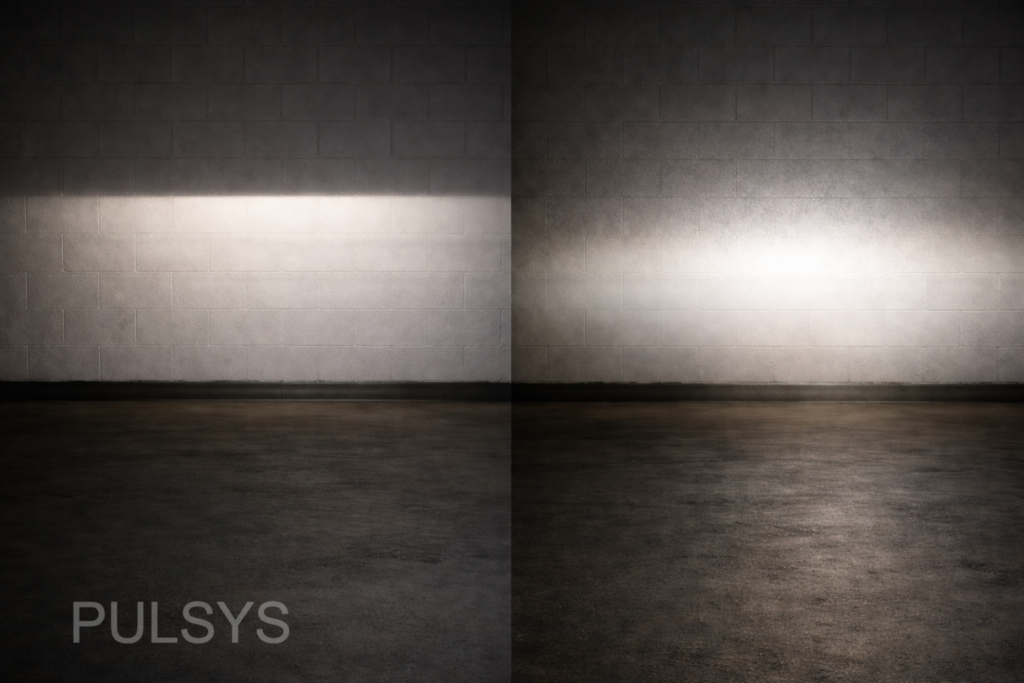
This is where the TST concept becomes especially relevant for LED headlight bulbs. If the emitting structure becomes too large or too far from the intended optical reference, the beam can lose focus, produce more foreground scatter, and increase glare, noting thar the original halogen filament is extremely small and that the headlamp is designed around that small source. If the light no longer comes from that compact region, focus suffers.
TST helps because it supports a compact emitter structure without forcing as much compromise on heat dissipation. In other words, it gives designers a better chance of combining small emitting geometry with high power density. That does not automatically guarantee perfect beam performance in every headlamp, but it does address one of the underlying design conflicts more intelligently. Want to compare TST-based options for your project? Contact us for a sample program, thermal data review, or OEM/ODM discussion based on your target market and bulb platform.
Why TST Matters for Buyers
For distributors, private-label brands, and OEM/ODM projects, the value of TST should be measured in outcomes, not slogans. A better thermal path can translate into a larger usable power window, more stable output, lower thermal stress, and better long-term reliability. Those are not just technical benefits. They directly affect warranty cost, failure rate, return risk, and product reputation in the field.
From a sourcing perspective, TST is most relevant when your project needs to combine several difficult requirements at once:
- high power output
- compact bulb size
- controlled beam geometry
- long-term durability
- stable performance across varying temperatures
This is why TST belongs in the “technical solution” conversation rather than just the “feature” conversation. It addresses a real engineering conflict that many high-power LED bulbs struggle with.
How to Evaluate Whether a TST-Based Solution Is Actually Credible
If a supplier promotes TST or any similar thermal design concept, the best approach is to ask for evidence that connects the structure to measurable results.
- Start with thermal data. Ask how heat moves from the chip to the bulb body, what the steady-state temperature rise looks like, and whether the supplier can provide output drop data under continuous operation. This helps separate real thermal engineering from short-duration brightness claims.
- Ask about emitting geometry and beam control. The supplier should be able to explain source size, positioning tolerance, and how the design aligns with the intended filament-equivalent geometry. Beam pattern images are often more useful than lumen numbers alone.
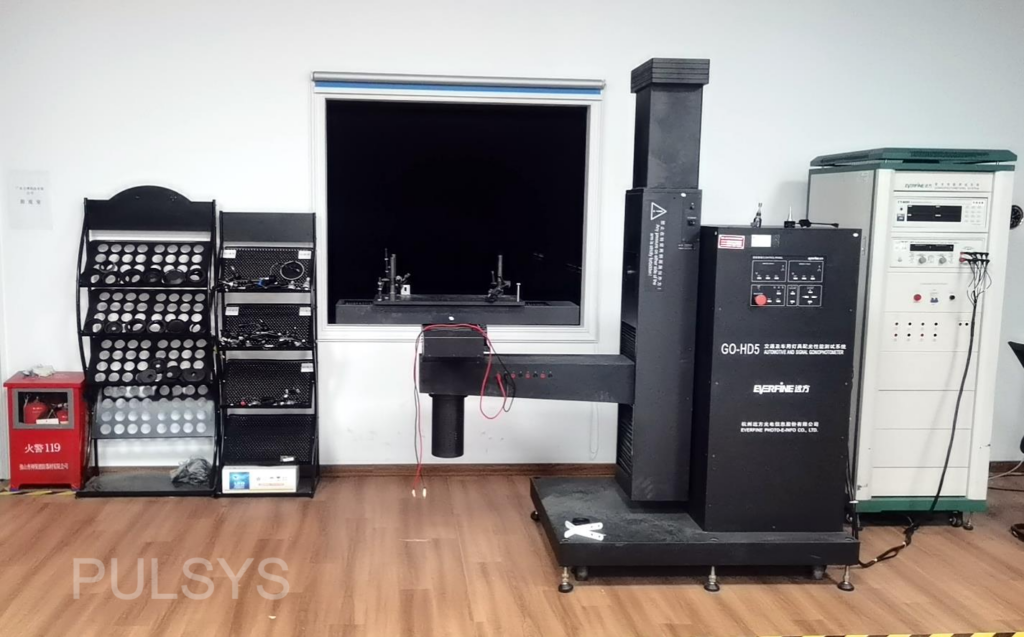
- Review reliability and environmental validation. High-power bulbs should be backed by thermal cycling, vibration, humidity, and related reliability checks if they are intended for demanding automotive use. OSRAM’s reliability note makes it clear that thermal management and lifetime cannot be separated.
- Clarify the compliance path for your market. If the project targets markets affected by FMVSS 108 or related frameworks, make sure product positioning, application claims, and technical documentation are aligned from the beginning.
If you are currently evaluating options, feel free to request a quotation and technical assessment from our team. With strong capabilities in optical design, thermal management, and OEM/ODM development, our engineers can support you in translating requirements into practical, compliant, and cost-effective solutions.
Final Thoughts
TST is valuable because it addresses one of the most difficult tradeoffs in high-power LED headlight bulb design: how to keep the emitter compact enough for optical focus while still moving heat away fast enough for stable high-output operation. The solution is to move electrical connections to the top of the LED and use the bottom more fully for thermal transfer. That lowers thermal resistance and supports a compact, higher-power structure.
For B2B buyers, the bigger takeaway is simple. Better LED bulb performance is not just about more brightness. It is about whether the product has been engineered to manage heat, preserve beam geometry, and maintain reliability over time. TST is worth paying attention to because it helps frame that conversation around real engineering value instead of just headline output numbers. Pulsys has already integrated TST technology into our current LED product lineups. If you are looking for a lighting solution that perfectly balances beam precision with sustained high-power output, please do not hesitate to contact us for detailed technical comparisons or sample test reports.