
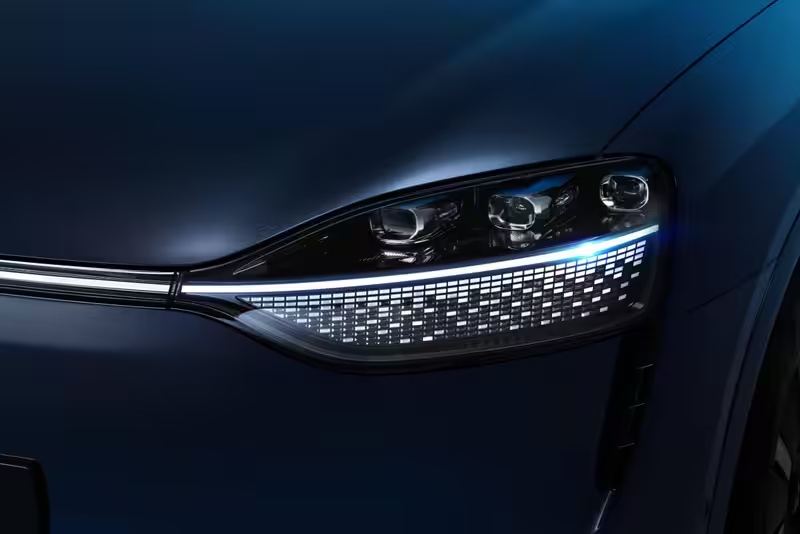
Matrix headlights use individually controlled light segments to reshape the road beam in real time, keeping more high-beam illumination active while reducing light around detected vehicles. That gives drivers better forward visibility without directing full high-beam intensity at other road users, which is why system performance depends on more than the LED array alone.
For EV brands, automotive lighting partners, OEM programs, and teams responsible for designing, producing, or integrating matrix headlight systems, the key variables are camera detection, control logic, optics, electronics, thermal design, calibration, testing, and regulatory validation. This guide explains how matrix headlights work, which design choices affect performance and production readiness, and what to account for in component selection, compliance, retrofit paths, and market-specific requirements from concept to mass production.
What Are Matrix LED Headlights?
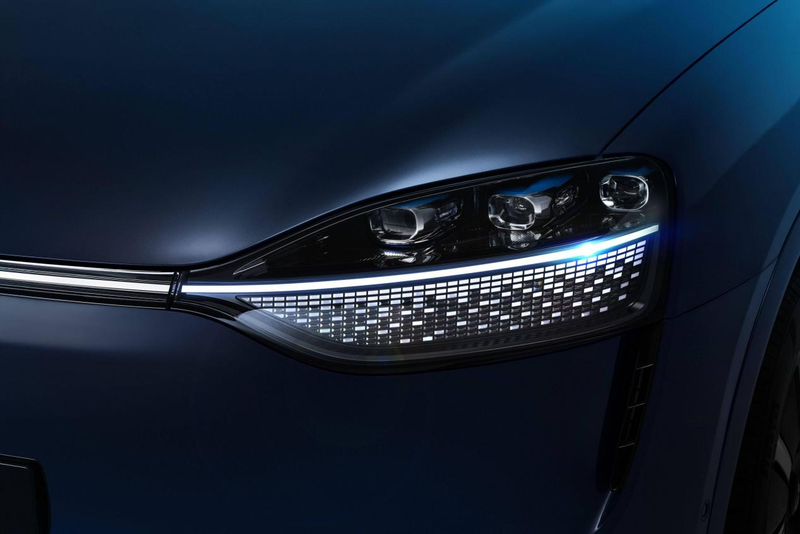
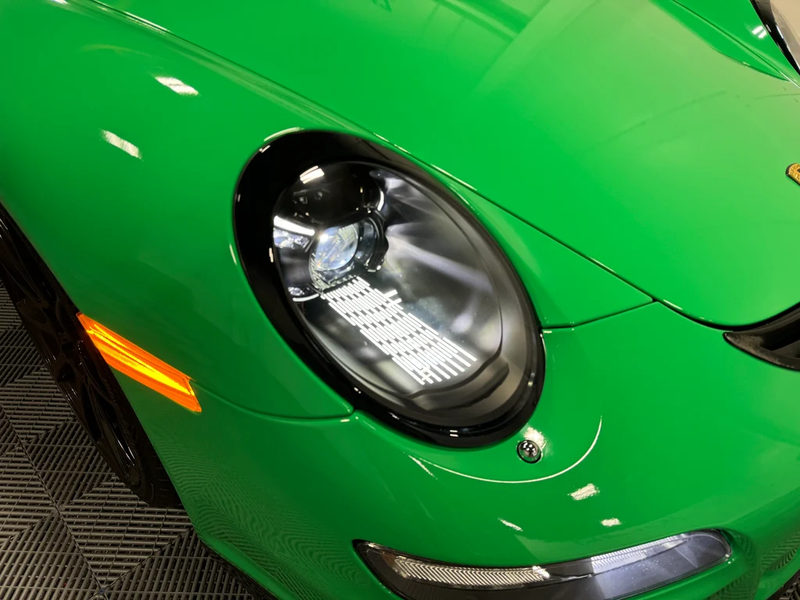
Matrix headlights divide part of the light distribution into independently controlled segments or pixels.
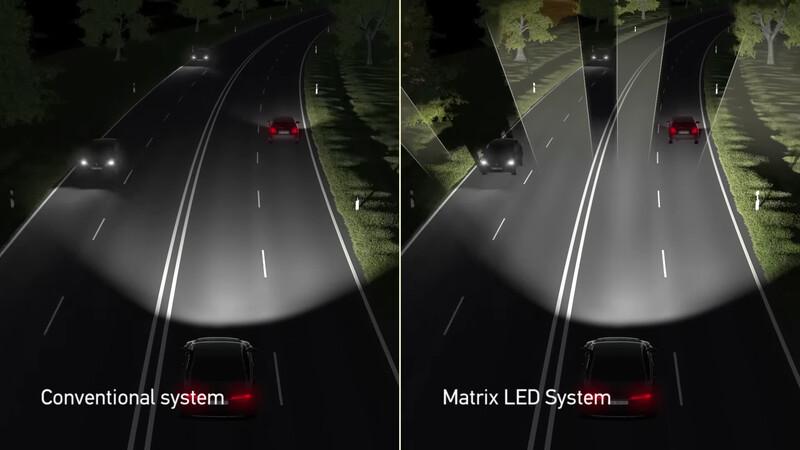
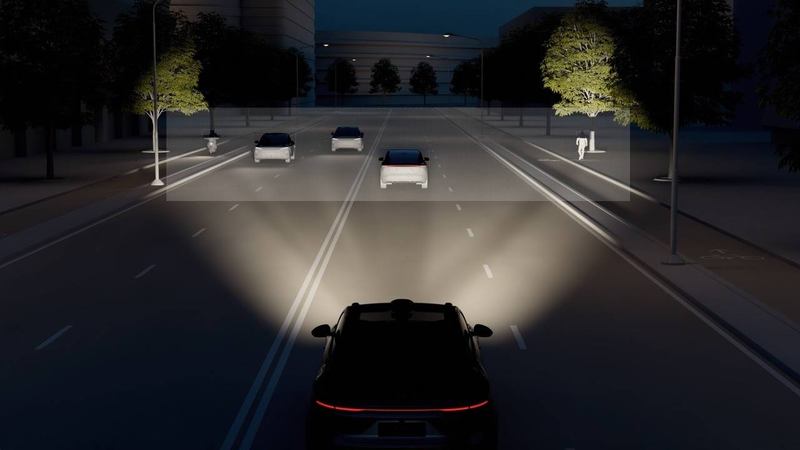
A forward-facing camera detects headlights, taillights, vehicles, oncoming cars, and road conditions. The lighting controller then dims or switches selected segments while keeping useful illumination active elsewhere.
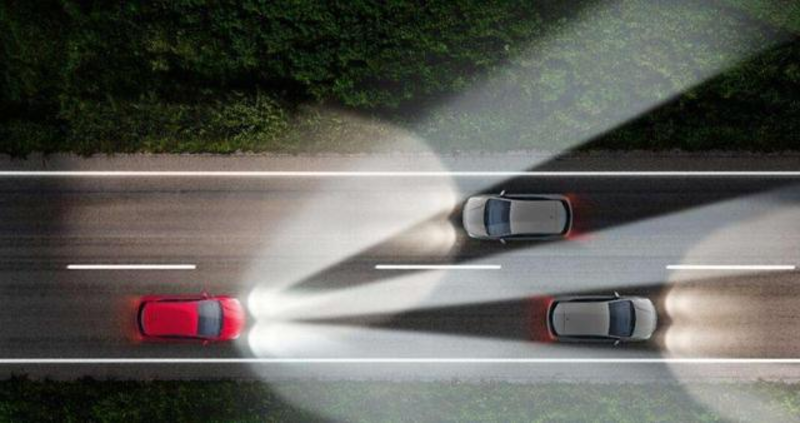
This function is commonly called adaptive driving beam, or ADB. Unlike a normal automatic high beam setup that switches the entire high beam on or off, a matrix system has the ability to create a reduced-intensity area around another vehicle while keeping more illumination active across the remaining road.
The UNECE definition of ADB follows the same principle: improving long-range visibility while adapting the beam around oncoming traffic and preceding vehicles.
How Do Matrix Headlights Work?
The operating sequence is straightforward:
- A camera captures the road scene.
- Software and a computer identify vehicles and relevant road features.
- The controller calculates where light must be reduced, increased, or block selected parts of the beam pattern.
- The lighting ECU converts the target distribution into segment commands.
- LED drivers adjust current to each segment or pixel.
- The optical system projects the updated pattern onto the road.
This process repeats as traffic, steering, road elevation, and vehicle speed change. The complete response must be fast enough to follow real traffic without creating visible pattern instability.
HD Matrix Headlights vs Other Adaptive Headlights
| Technology | How it works | Main limitation |
|---|---|---|
| Automatic high beam | Switches the entire high beam on or off | Loses long-range light when another vehicle appears |
| Curve-adaptive headlight | Moves the beam with steering or road curvature | Does not necessarily mask other vehicles |
| Matrix LED headlight | Controls multiple beam segments independently in matrix led headlights | Resolution depends on segments and optics |
| HD pixel headlight | Controls hundreds or thousands of smaller pixels | Higher cost, data, thermal, and calibration demands |
The names vary between manufacturers, from basic led headlights to more advanced systems, so focus on the actual functions and architecture rather than the marketing label. The key difference is how each setup controls light, with hd matrix sitting between conventional matrix systems and the most advanced digital versions.
Decision 1: Define the Function Before Choosing Pixel Count
Start with the required lighting functions, including advanced functions available on selected top models:
- Basic glare-reduced high beam;
- Dynamic corner or motorway lighting;
- Weather-specific distributions;
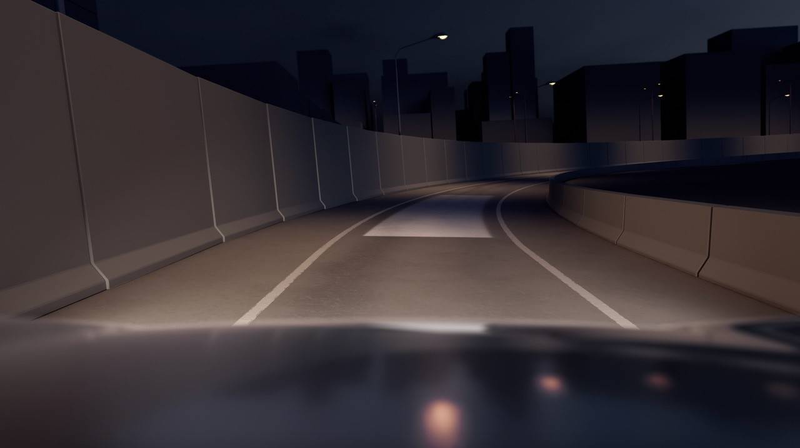
- Lane guidance or road projection, such as a light carpet;
- Current and future software-enabled functions;
- Target-market requirements.
More pixels can provide finer control, but they also increase driver channels, data volume, thermal density, calibration work, and validation cost; as a design tradeoff, higher counts can also improve the precision of projection features and matrix design effects.
Pixel count does not equal road resolution. A useful first estimate is:
Angular step size ≈ controlled field of view ÷ controllable elements across that direction
Optical blur, alignment tolerance, and pixel crosstalk reduce the effective resolution.
Pulsys experience: begin with six inputs
Customers often begin by asking how many pixels a module has. In Pulsys project work, we first confirm six inputs: target function, target market, sensor and controller architecture, package space, electrical and thermal budget, and expected production scale.
This avoids selecting a high-resolution module that the vehicle cannot cool, control, calibrate, or validate economically.
Decision 2: Match the Digital Matrix Module and Projector Optics
The light source and projector lens must be developed as one optical system, with the matrix unit designed as an LED module within that assembly.
Key variables include the emitting area, pixel pitch, lens focal length, field of view, optical efficiency, stray light, segment overlap, and mechanical datums.
Too much overlap creates a soft shadow around other vehicles, especially in masking cases involving vehicles ahead. Too little overlap can create dark gaps or visible striping. The target is a smooth road distribution that remains stable across temperature, vibration, and manufacturing tolerance.
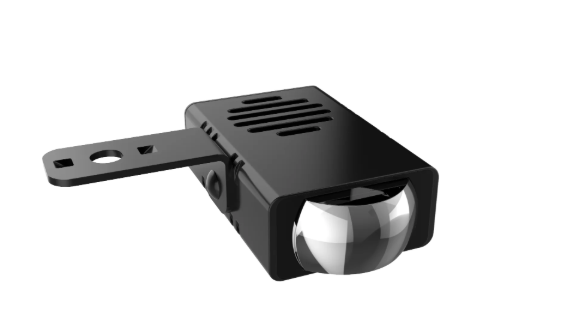
Pulsys provides matrix light modules, pixel matrix modules, and projector-lens solutions for EV and intelligent lighting projects.
Discuss Your Matrix Headlight Architecture With Pulsys
Decision 3: Calculate the Shadow Margin
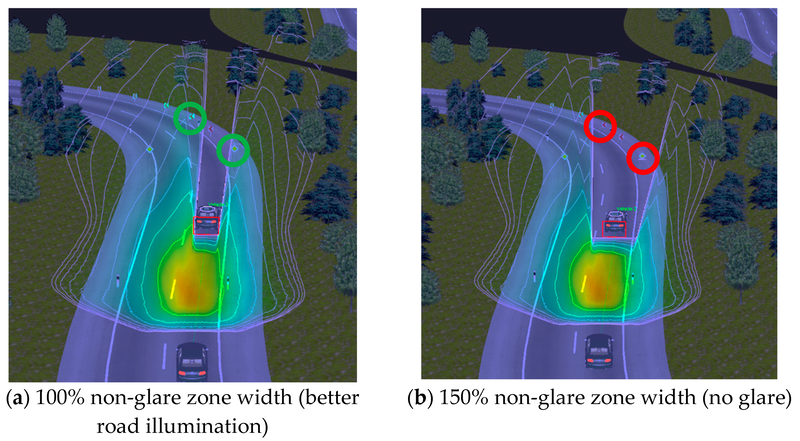
The reduced-intensity area around a car ahead is not determined by pixel size alone. It must include margin for:
- Camera detection error;
- Processing and communication delay;
- Camera-to-headlamp calibration error, including full height masking control where applicable;
- Vehicle pitch, roll, and vibration;
- Road curves and elevation changes;
- Optical spread between adjacent pixels.
If the mask is too small, glare risk increases. If it is too large, the system loses much of its visibility benefit.
More pixels reduce the control step, but they do not correct poor detection, latency, or calibration.
Decision 4: Control Latency and Pattern Stability
Total response time includes camera exposure, image processing, object tracking, network transfer, lighting calculation, auto driver update, and LED response.
A fast LED cannot compensate for a slow control chain, especially in changing traffic and at night.
Test situations where other cars appear around a curve, a motorcycle enters the scene, the host vehicle crests a hill, or several vehicles require separate masking.
The mask must not jump or repeatedly expand and contract. Filtering improves stability, but excessive filtering adds delay. Both effects should be evaluated on the vehicle, not only in simulation.
Decision 5: Define Electronics, Communication, and Diagnostics
A production matrix headlight uses computer-controlled electronics and diagnostics and may include the LED matrix, multi-channel drivers, headlamp ECU, vehicle controller, camera ECU, communication interfaces, temperature sensors, and power protection.
Define ownership early:
- Which ECU detects vehicles?
- Which ECU calculates the light distribution and owns each lighting functionality?
- Which device controls pixel current?
- Where is calibration data stored?
Diagnostics should detect open or shorted channels, communication loss, overtemperature, supply faults, driver errors, sensor blockage, and invalid calibration.
The HELLA matrix LED system overview illustrates why coordination between the camera, assistance controller, power modules, and headlamp is essential, and why the underlying tech must be clearly partitioned.
Decision 6: Manage Heat Across the Complete Module
High pixel density concentrates heat in a small area. Thermal design affects light output, color, electronics, optical alignment, and service life, and LED systems generally run cooler and last longer than halogen, so their light sources are not typically replaced as frequently as halogen bulbs.
Evaluate the full heat path from LED junction to substrate, heat spreader, module housing, headlamp structure, and ambient air.
Test cold start and thermally stabilized operation. Measure segment output, color shift, driver temperature, thermal derating, and temperature variation across the matrix.
An average module temperature can hide a local hot spot. A high-resolution light source needs local thermal data.
Decision 7: Build a Safe Failure State
Camera, software, network, driver, and LED faults must lead to a safe and predictable light distribution.
Depending on the system, this may mean reverting from ADB to a compliant fixed low beam, disabling the affected function, limiting output after overheating, storing a fault code, and informing the driver.
Fail-safe behavior cannot be added at the end of software development. It affects hardware channels, diagnostics, optics, power design, and approval testing.
Decision 8: Set the Target Market Before Freezing Hardware
Regulations affect photometry, installation, activation logic, testing, documentation, and markings.
Markets using UN vehicle regulations apply UN Regulation No. 149 to road-illumination devices, including adaptive systems. Installation requirements must also be reviewed for the vehicle and market.
In the United States, NHTSA amended FMVSS No. 108 to permit ADB systems. The NHTSA final rule uses requirements that are not identical to the framework used in Europe. On some Audi models equipped with matrix headlights, the matrix function is not fully enabled in the US. European-market lighting features may be unlocked through activation services, but only when the required hardware is present.
Do not assume one control map or approval report works worldwide. Review each market before freezing hardware and software.
Decision 9: Design for Calibration and Production
A prototype can be adjusted manually. A production system must achieve the result repeatedly.
Control the tolerance chain from LED matrix to substrate, module housing, projector lens, headlamp housing, vehicle body, and camera coordinate system.
Production planning should include:
- Optical alignment fixtures;
- Segment and pixel functional tests;
- End-of-line photometric checks;
- Calibration-data programming;
- Headlamp aiming;
- Software and hardware traceability, including build-code or hardware-configuration checks in the trunk during vehicle-specific verification where required;
- Change control for optics, LEDs, drivers, PCB, and firmware.
Pulsys experience: freeze the optical-control chain
A common scale-up mistake is treating the matrix module, projector lens, driver, and control map as interchangeable parts. They form one correlated system.
Pulsys recommends freezing a golden combination of module, optics, mechanical datums, current map, calibration method, and thermal condition. If one element changes, the affected optical and control results should be revalidated.
We also compare cold and stabilized-hot samples. One perfectly adjusted cold prototype does not prove production stability.
Essential Matrix Headlight High Beam Tests
| Test area | What to verify |
|---|---|
| Segment function | Output, dimming, response, open/short diagnostics |
| Static photometry | Low beam, high beam, reduced zones, transitions |
| Dynamic scenarios | Vehicles, motorcycles, curves, hills, multiple targets |
| Calibration | Camera, module, aim, and body tolerances |
| Thermal/electrical | Cold start, hot output, voltage limits, derating |
| Environmental | Vibration, humidity, water, dust, corrosion, thermal cycling |
| EMC/network | Emissions, immunity, communication, startup, recovery |
| Fault injection | Camera loss, timeout, driver fault, stuck segment |
| End-of-line | Optical alignment, diagnostics, calibration, traceability |
Testing must cover component, headlamp, vehicle, software, and production levels. A photometrically correct module can still fail if camera calibration, thermal stability, or fault handling is weak.
Send Pulsys Your Matrix Headlight Requirements
Can You Retrofit Matrix Headlights?
A true matrix-headlight retrofit is rarely a bulb replacement. It may require compatible headlamp assemblies, a front camera, lighting and assistance controllers, vehicle wiring, software coding, calibration, aiming, and approved market-specific components.
Matrix-capable hardware does not guarantee an active matrix function. The vehicle may lack the correct controller, software, sensor, or regulatory configuration.
Vehicle-specific retrofits should follow manufacturer procedures and local requirements.
Frequently Asked Questions
Are matrix headlights the same as adaptive headlights?
Matrix headlights are one type of adaptive lighting. Adaptive headlights can also describe systems that swivel into curves or change range without controlling multiple beam segments. More advanced smart headlights, such as digital matrix or hd matrix headlights, can also project patterns or animations that standard adaptive headlights typically cannot.
Is a higher pixel count always better?
No. Performance also depends on optics, field of view, luminance, thermal stability, latency, detection, calibration, software, and production tolerance; for example, adding more pixels only helps if the optics and control software can use them effectively.
What happens if the camera cannot see clearly?
The system should detect unreliable input and move to a defined safe lighting state. Exact behavior depends on the vehicle design and applicable regulations.
Are matrix headlights legal in the United States?
FMVSS No. 108 permits ADB systems that meet its requirements. This does not make every matrix headlamp designed for another market automatically compliant. Legal approval still differs for more advanced systems such as Digital Matrix and Laser Light, especially where projection features or animations are involved, and some premium Audi systems sold in Europe may ship with reduced US functionality.
Final Thoughts
Matrix headlights improve visibility by controlling where high-beam light is reduced and where it remains active. In matrix LED headlights, that selective beam control lets the system act as smart headlights without dimming the full road scene. Their performance does not come from the LED matrix alone. Optics, perception, latency, thermal management, calibration, safe-state design, regulations, and production control must work together.
Pulsys supports EV brands, automotive lighting partners, and OEM projects with matrix light modules, pixel matrix modules, projector optics, and integration support. Share your target function, market, vehicle interface, package envelope, and production plan to begin a technical review.