
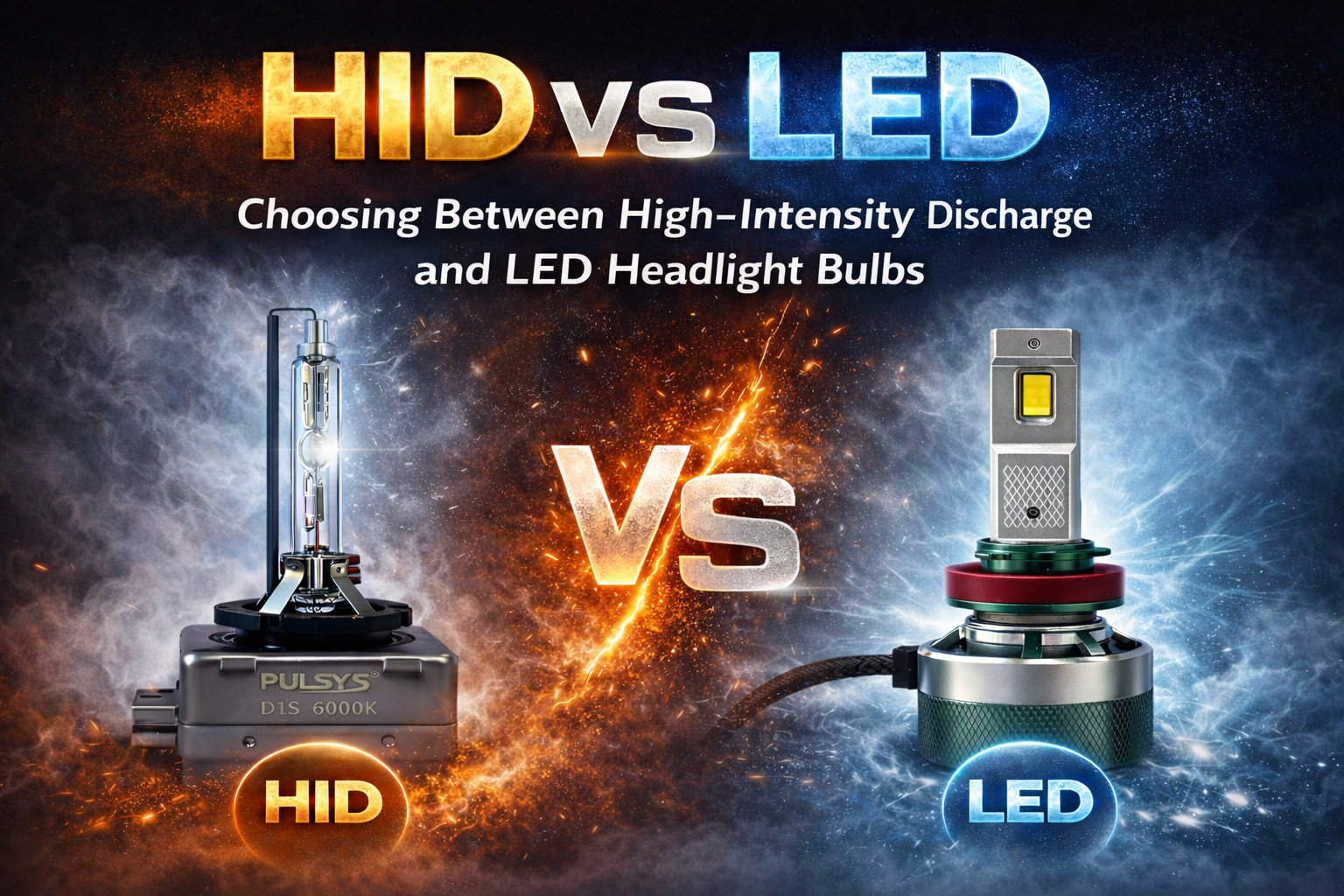
Introduction to Headlight Bulbs
Headlight bulbs are a crucial component of a vehicle’s lighting system, providing the necessary illumination for safe driving, especially at night or in low-visibility conditions. Over the years, automotive lighting has evolved significantly, moving from traditional halogen bulbs to more advanced options like LED headlight bulbs and high intensity discharge (HID) bulbs.
Each type of headlight bulb brings its own set of advantages and considerations. Traditional halogen bulbs, once the standard, are now often replaced by LED and HID bulbs due to their superior energy efficiency, brightness, and longer lifespan.
When choosing between these different types of headlight bulbs, it’s important to consider factors such as the type of vehicle, driving environment, and personal preferences regarding visibility and energy consumption. Understanding the main differences between LED and HID headlight bulbs can help drivers make informed decisions that enhance both safety and performance on the road.
Quick Summary of HID vs LED
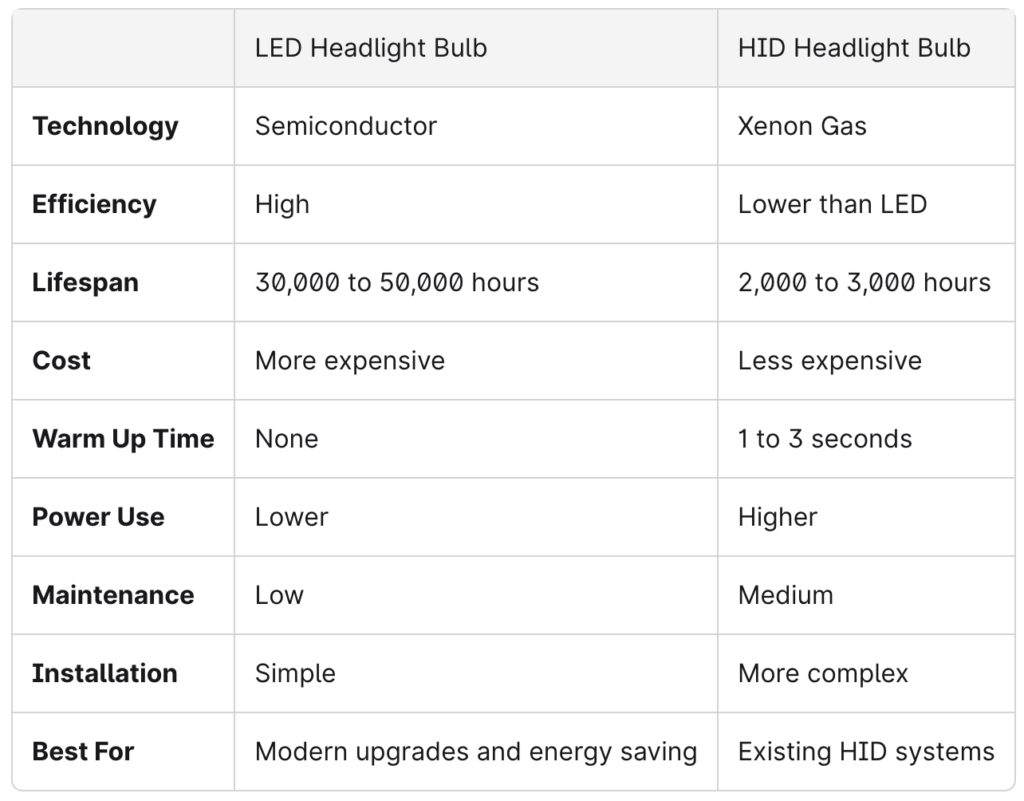
Here is a summarized comparison of HID vs LED headlights:
- The main difference in energy efficiency is that LEDs typically offer higher energy efficiency and lower electrical draw than HIDs, benefiting vehicle electrical systems.
- HIDs often provide superior long-range illumination in projector housing setups, especially at similar perceived brightness.
- Lifespan differences are substantial: modern LED headlight bulbs commonly outlast most HID bulbs by a wide margin.
How Headlight Bulbs Produce Light
Headlight bulbs fall into three main production methods:
Filament heating, gas discharge, and semiconductor emission. The function of HID and LED bulbs is based ondifferent scientific principles, and understanding these differences can be complex.
- HID headlights use gas discharge technology. HID headlights function by creating an electrical arc between two electrodes within a gas-filled tube.
- LED headlights use semiconductor emission. LED headlights produce light through a chip that glows when powered with electricity.
High-Intensity Discharge (HID) Bulb Basics
- HIDs create light via an electrical arc between two electrodes inside a xenon-filled capsule.
- HID headlights have an inner quartz chamber with electrodes where the light is produced.
- HIDs require both a ballast and an ignitor to function, making their design more complex compared to LEDs.
- HID headlights often produce very high lumen output with distinct color temperatures ranging from warm white to blue.
LED Bulb and LED Headlight Bulbs Basics
- LED bulbs emit light from semiconductor diodes that convert electricity directly into photons, producing minimal warm-up time.
- LEDs can convert up to 90% of their energy into light, while HIDs convert around 70-80%, meaning LEDs use more energy for visible light output and are more energy efficient.
- LED headlight bulbs rely on heat sinks and drivers to manage thermal output and preserve diode longevity.
Real-World Performance: HID Headlights vs LED Headlights
- In projector housing, HID headlights typically produce a sharper cutoff and better long-distance hotspot than many LED conversions. When comparing how bright each option is, LED headlights can produce up to 10,000 lumens of total light output, while HID headlights can produce up to 8,000 lumens. LED headlights are extremely bright in most cases, making them ideal for night driving.
- In reflector housings, LED bulbs often outperform HIDs by producing a more usable, evenly distributed beam pattern. LED headlights light up immediately and are consistently bright, making them ideal for urban driving and well-lit areas.
- Beam quality depends more on source placement relative to the reflector or projector than raw lumen ratings alone. HIDs excel in long-distance illumination, providing better visibility on highways and rural roads. HID headlights are renowned for their superior brightness and range, making them particularly useful for highway driving and long road trips. It’s important to measure brightness at a specific point (lux) to accurately compare performance and determine if led headlights brighter than HIDs in real-world use.
- Color temperature affects perceived brightness; cooler whites (5000–6500K) can look brighter but may reduce contrast in fog. LED headlights turn on instantly, while HIDs take a few seconds to reach full brightness.
To see these headlights in action, subscribe to our channel for more lighting comparisons.
Projector Housing, Reflectors, and Beam Pattern Interaction
- Projector housing focuses light with a visible cutoff, making HID bulbs perform reliably with proper alignment. HIDs are better and brighter in projector lenses compared to stock headlights, offering a significant upgrade in luminosity.
- Reflector housings depend on bulb geometry; mispositioned LED bulb elements can create glare or dark spots.
- Properly matched LED headlight bulbs in a projector housing can work, but many retrofit outcomes vary widely by assembly. Aftermarket HID and LED bulbs are often compared to stock headlights to highlight improvements in brightness and performance.
Energy Efficiency and Heat Considerations
- LED headlight bulbs are more energy efficient than HIDs and halogens, converting a higher percentage of electrical energy into light and reducing waste heat compared to HIDs.
- LEDs can use up to 80% less energy than HIDs, significantly lowering utility bills.
- Halogens are less efficient and produce less light compared to both LEDs and HIDs.
- HIDs convert more input energy into radiant heat and require additional components, increasing total system draw.
- Heat management in LEDs is critical; poor cooling reduces lifespan and can change beam pattern over time.
Lifespan, Maintenance, and Reliability
- Typical modern LED headlight lifespans range from about 20,000 to 45,000 hours depending on thermal management.
- HID bulbs commonly last between several thousand and around 15,000 hours, with brightness gradually fading over time.
- Failure modes differ: LEDs often fail from driver or thermal stress, while HIDs tend to fade or have ballast-related failures.
- Maintenance frequency and component complexity (ballast, ignitor, drivers) influence long-term reliability and cost.
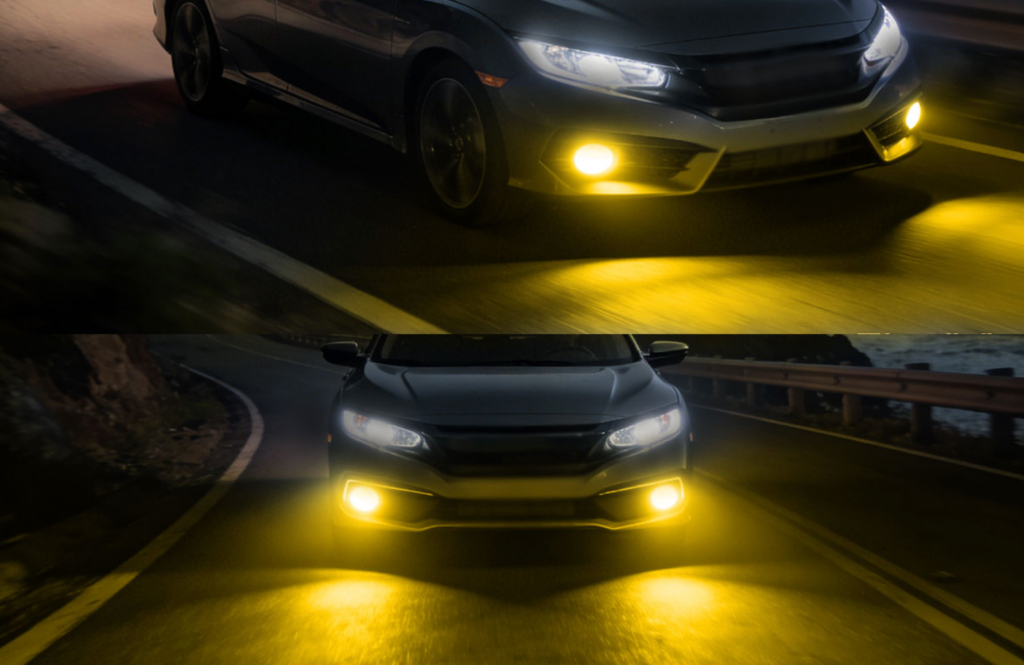
Fog Lights: HID vs LED for Fog Lights
- Yellow/amber light around 3000K reduces glare in fog, making bulb color more important than absolute lumen rating.
- LED fog lights offer long life and lower power use, but yellow LED packages can be less common than HID 3000K options.
- HIDs in fog lights can produce strong output but risk increased glare if beam pattern or cutoff is poor.
Installation, Compatibility, and Legal Considerations
- Retrofit conversions can cause improper beam patterns and glare if the new bulb’s light source position differs from OEM design.
- Many vehicle regulations restrict aftermarket HID or LED conversions that alter original headlight type or beam cutoff.
- Some modern vehicles integrate LED headlights into assemblies, preventing simple bulb swaps between LED and HID systems. In these cases, you may need to replace the entire headlight assembly rather than just the bulb when upgrading from HID to LED or vice versa.
Safety Considerations
When it comes to headlight bulbs, safety is always a top priority. The right automotive lighting not only helps drivers see the road ahead but also ensures that their vehicle is visible to others, reducing the risk of accidents.
LED headlights are particularly valued for their instant-on capability and consistent brightness, which can be especially beneficial in city driving or situations that require frequent stops and starts. Their energy efficiency also means they generate less heat, lowering the risk of electrical issues or damage to the vehicle’s wiring. On the other hand, HID headlights are known for their powerful, far-reaching beams, making them ideal for highway driving where long-range visibility is essential.
However, unlike LEDs, HID bulbs require a few seconds to reach full brightness, which can be a consideration in situations where immediate illumination is needed. Durability and resistance to damage are also important safety factors, as reliable headlight bulbs help maintain optimal visibility in all conditions. Additionally, fog lights, whether LED or HID, play a critical role in improving visibility during fog, heavy rain, or snow, further enhancing overall driving safety.
Cost and Total Ownership
- LED headlight bulbs typically cost more upfront than HID kits, but energy efficiency and longer lifespan reduce lifetime cost.
- HIDs often have lower initial bulb cost yet may require additional parts like ballasts and periodic replacements.
- Warranty length and availability of replacement parts materially affect long-term ownership costs for both technologies.
Choosing the Right Option: Practical Recommendations
- If your vehicle uses projector housing and you prioritize long-range visibility, consider properly calibrated HID headlights as the best option.
- If you want low maintenance, lower electrical draw, and instant-on performance, LED headlight bulbs are generally the best option.
- For reflector-headlamp vehicles, LED bulbs are often the better upgrade choice for even beam distribution and reduced glare risk, making them the best option in this scenario.
- For fog lights, prioritize color temperature and beam shape over pure lumen numbers to reduce backscatter in poor weather.
When deciding between LED vs HID bulbs, consider factors such as your driving habits, budget, and vehicle type to choose the best option for your needs.
The Industry Shift: From Bulbs to Complete Lighting Solutions
While HID and LED are often compared as competing bulb technologies, the market is gradually moving beyond that discussion. In many cases, HID can be seen as a transitional technology between traditional halogen systems and the more integrated LED era.
The future of automotive lighting is not simply about who can sell a brighter bulb. It is increasingly about who can deliver a complete lighting solution. That includes:
- optical beam design
- thermal management
- driver and power control
- vehicle-specific fitment and compatibility
As a result, many manufacturers are upgrading from selling standalone LED bulbs to developing LED modules and, eventually, complete lighting systems. This shift reflects a broader industry trend: performance today depends not only on the light source itself, but on how the entire system is engineered.
Quick Buyer Checklist Before Replacing Headlight Bulbs
- Confirm your headlight assembly type (projector vs reflector), OEM bulb position tolerance, and the type of vehicle—such as car, truck, or motorcycle—you are upgrading.
- Compare measured beam pattern and cutoff performance, not only lumen or kelvin ratings.
- Check legal compliance, OEM compatibility, and whether additional components (ballast, driver) are required.
- Review warranty, expected lifespan, and replacement-part availability for both LED and HID options.
To learn more about headlight technologies and color temperatures, explore our detailed guides.
Many drivers in cold climates prefer HIDs because they generate significant heat, which can help melt snow and ice off headlights and other outdoor fixtures.
Subscribe to our channel for more updates and reviews on automotive lighting.
Conclusion and Final Thoughts
Ultimately, selecting the best headlight bulbs for your vehicle comes down to understanding your specific needs and the unique benefits each technology offers. Both LED and HID headlight bulbs represent significant advancements over traditional halogen bulbs, delivering improvements in brightness, energy efficiency, and lifespan.
LED headlights stand out for their instant illumination, longer lifespan, and lower energy consumption, making them an ideal choice for daily driving and vehicles with reflector-style headlight assemblies. HID headlights, with their intense and far-reaching light output, are often preferred for highway driving and vehicles equipped with projector-style housings.
When considering an upgrade, it’s important to weigh factors such as cost, maintenance, compatibility, and the type of driving you do most often. By carefully evaluating these aspects, drivers can choose headlight bulbs that not only improve visibility and safety but also offer long-term value and reliability. Whether you prioritize energy efficiency, brightness, or longevity, making an informed decision about your automotive lighting will help ensure a safer and more enjoyable driving experience.